Castle
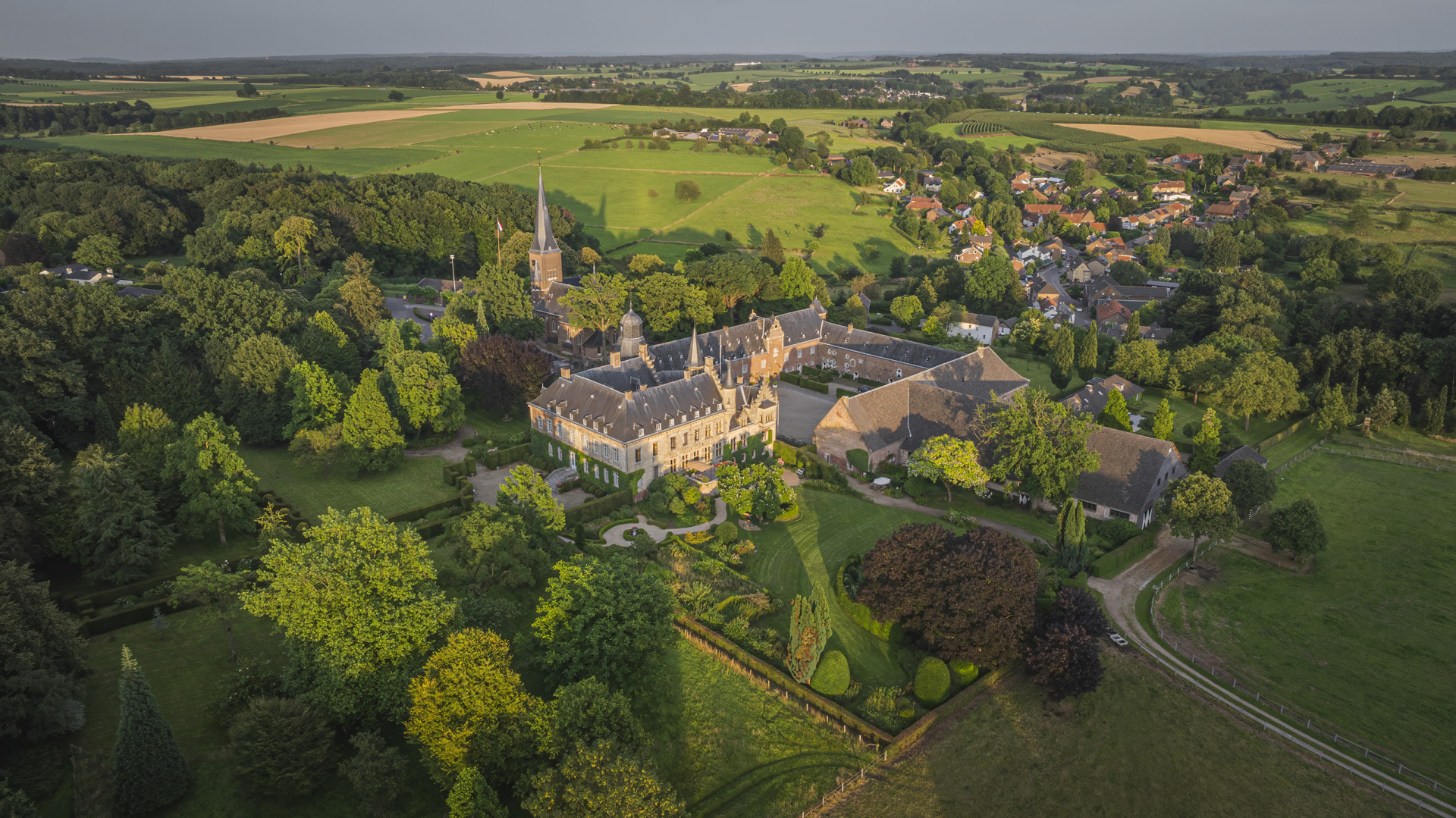
A centuries-old family heritage in the far south of the Netherlands, near Maastricht. It is believed that, at the place where ancient roads once crossed, a Roman residence may have stood. Today, an impressive entrance gate leads to the grand courtyard, with its U-shaped outer bailey and the castle at its heart.
The history of the castle dates back to the early 14th century. Its many architectural styles, combined with its unique location in an iconic landscape, its close connection with the charming Limburg village, and its remarkable history, make it a colourful and impressive ensemble. A hidden gem where time appears to have stood still.
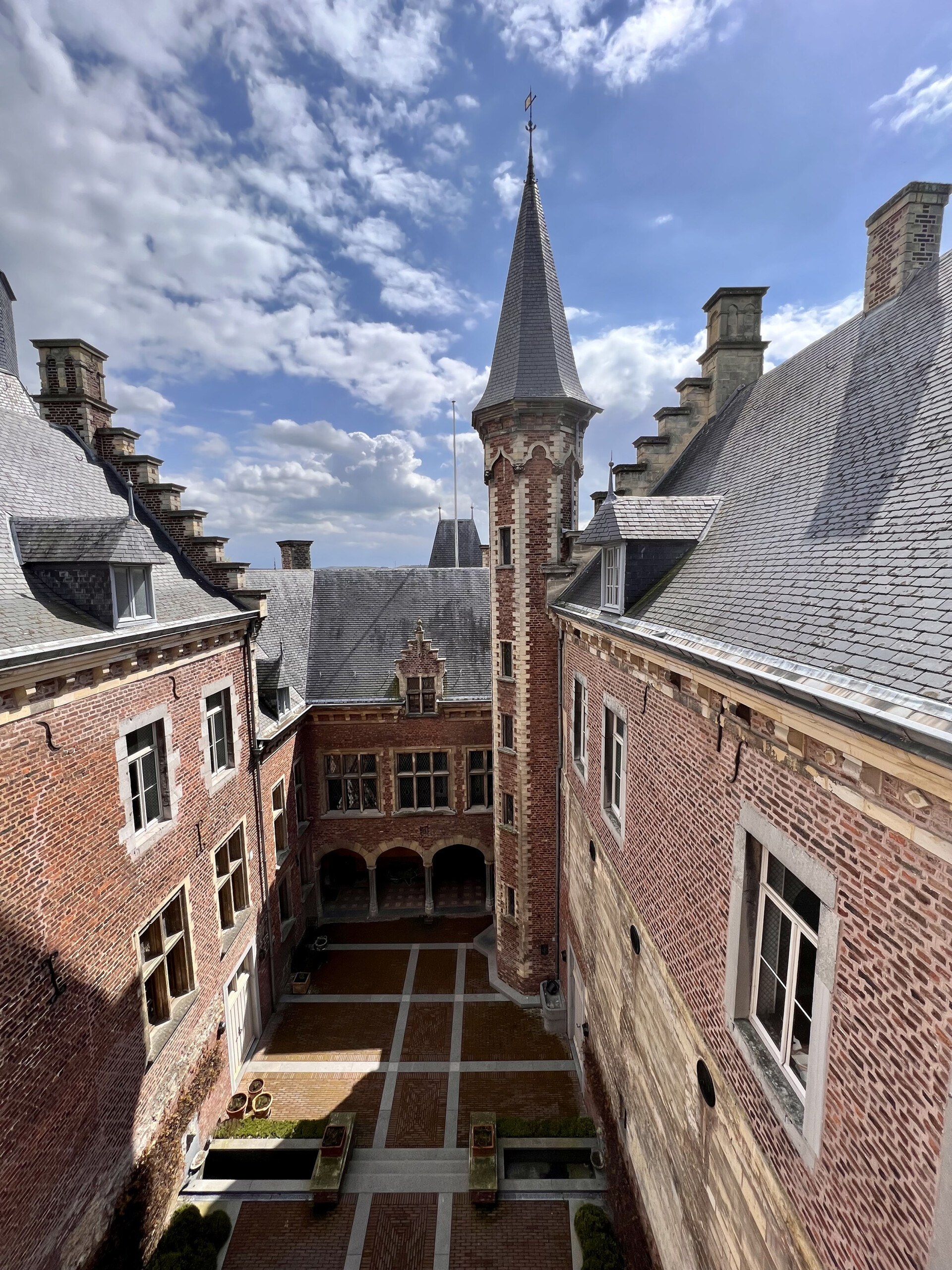
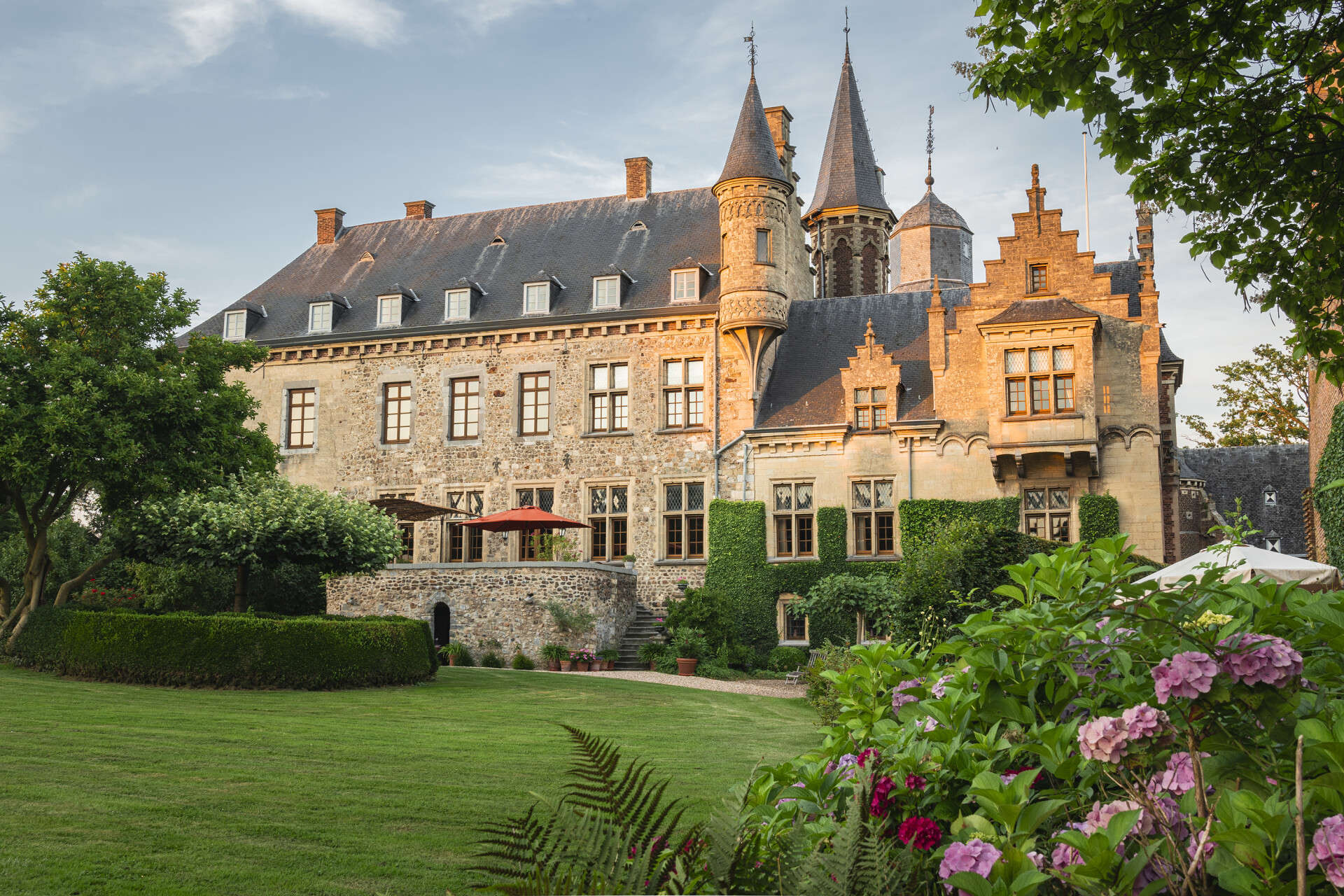
Kasteel Mheer is a remarkable historic monument with roots dating back to the Middle Ages. Owned by the same family since 1668, the castle is a richly layered example of architectural heritage. The complex consists of a main residence with four wings surrounding an inner courtyard, together with a U-shaped outer bailey. Over the centuries, the castle has undergone continuous transformations (17th–20th century), while preserving many historic elements, resulting in a fascinating blend of architectural styles. In the 20th century, the choice was made to create an English Tudor-style façade with Flemish influences.
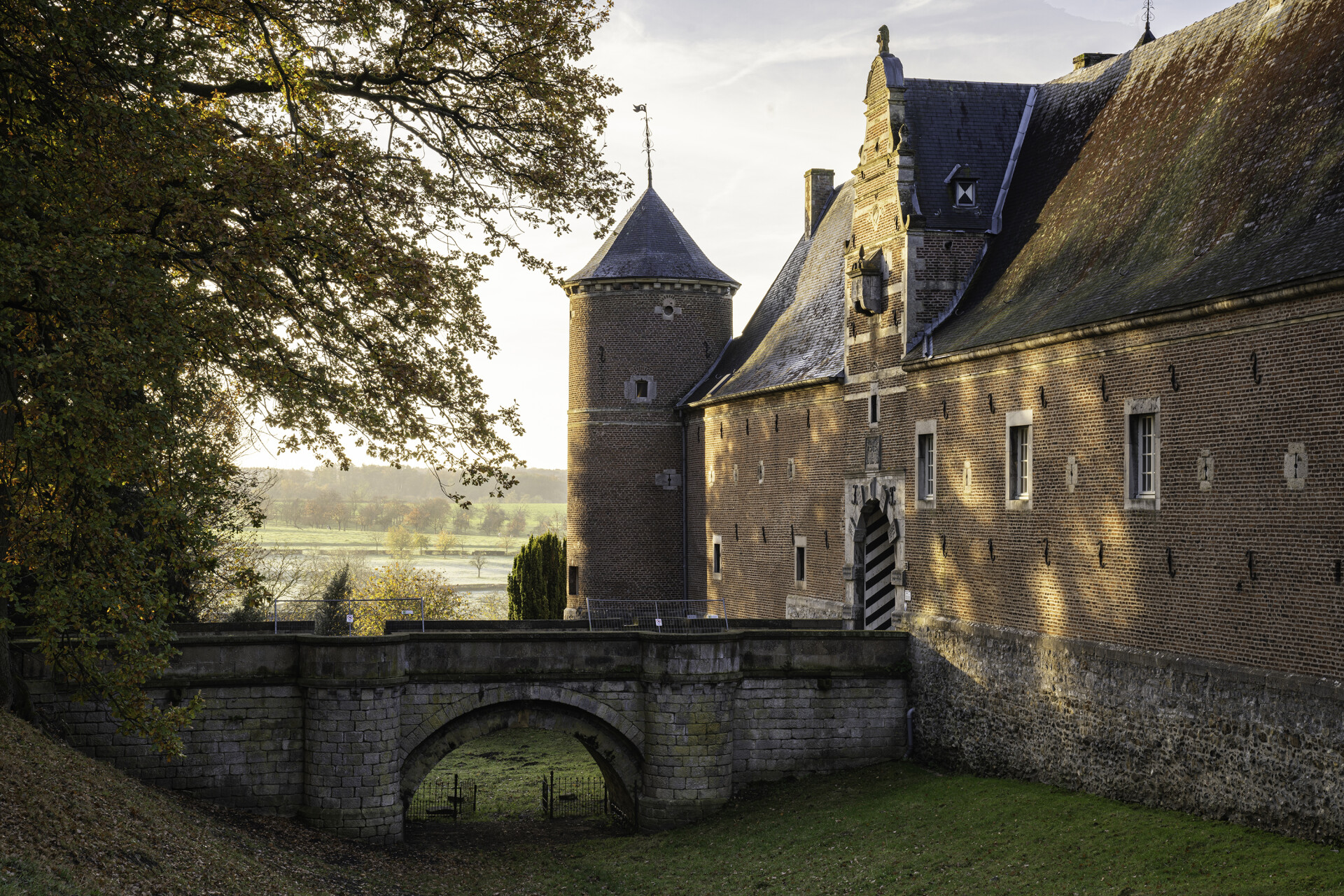
One of the castle’s most remarkable and rare defensive features is the pekneus (or machicolation) above the entrance gate of the outer bailey, bearing the inscription: SIT PAX INVIOLATA TIBI "May unbroken peace be yours."
This stone projection, with an opening underneath, was designed for defensive purposes during times of conflict, allowing defenders to pour boiling pitch, hot oil, or drop stones onto attackers attempting to breach the gate.
Such defensive structures have rarely survived in the Netherlands, making this unique feature of Kasteel Mheer an especially remarkable piece of medieval heritage.
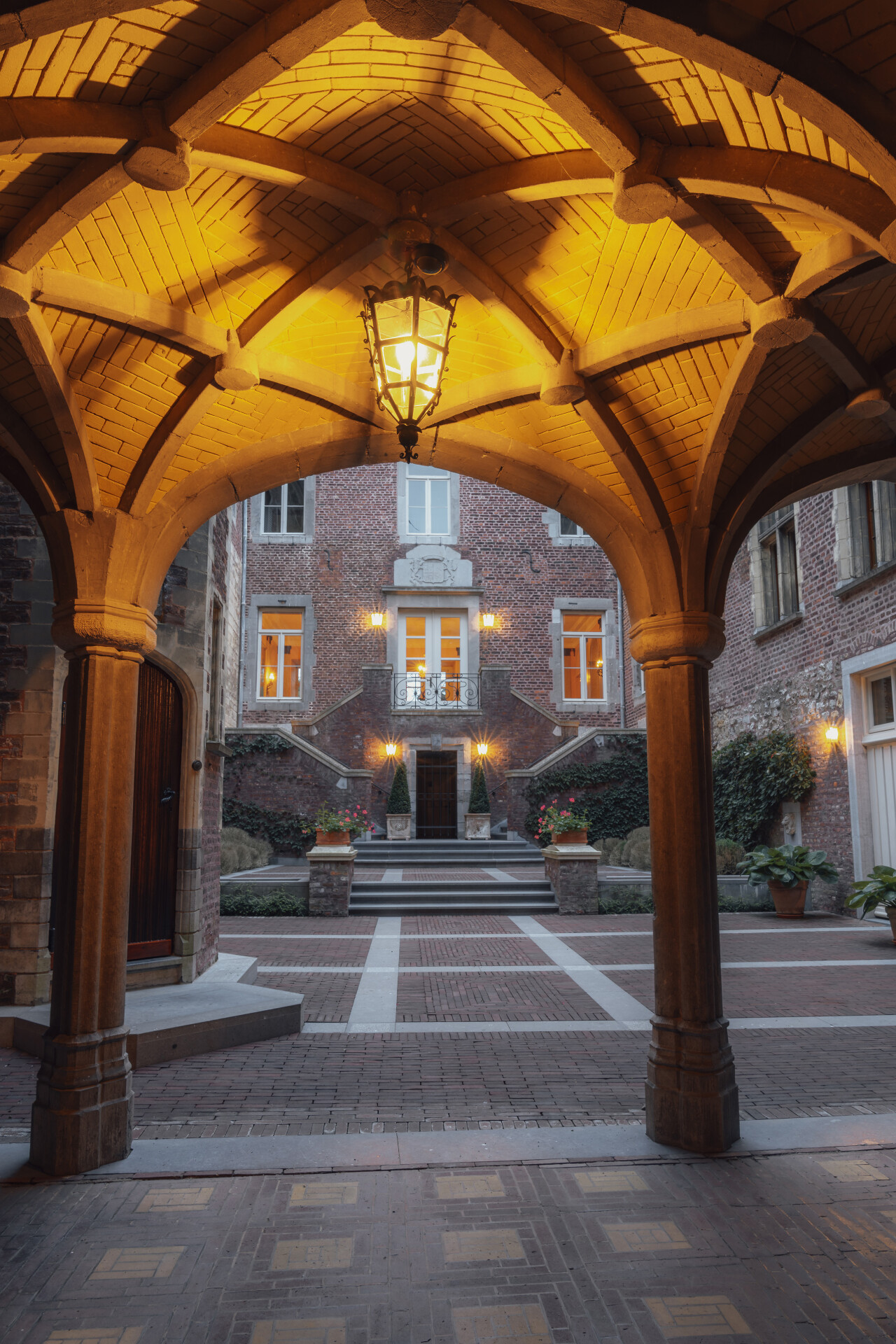
Well preserved heritage
The oldest parts of the castle, particularly the western wing, are constructed from local marlstone and feature beautiful stepped gables. This architectural style is characteristic of South Limburg castles and has been remarkably well preserved. The marlstone gives the castle its distinctive soft, almost golden appearance.
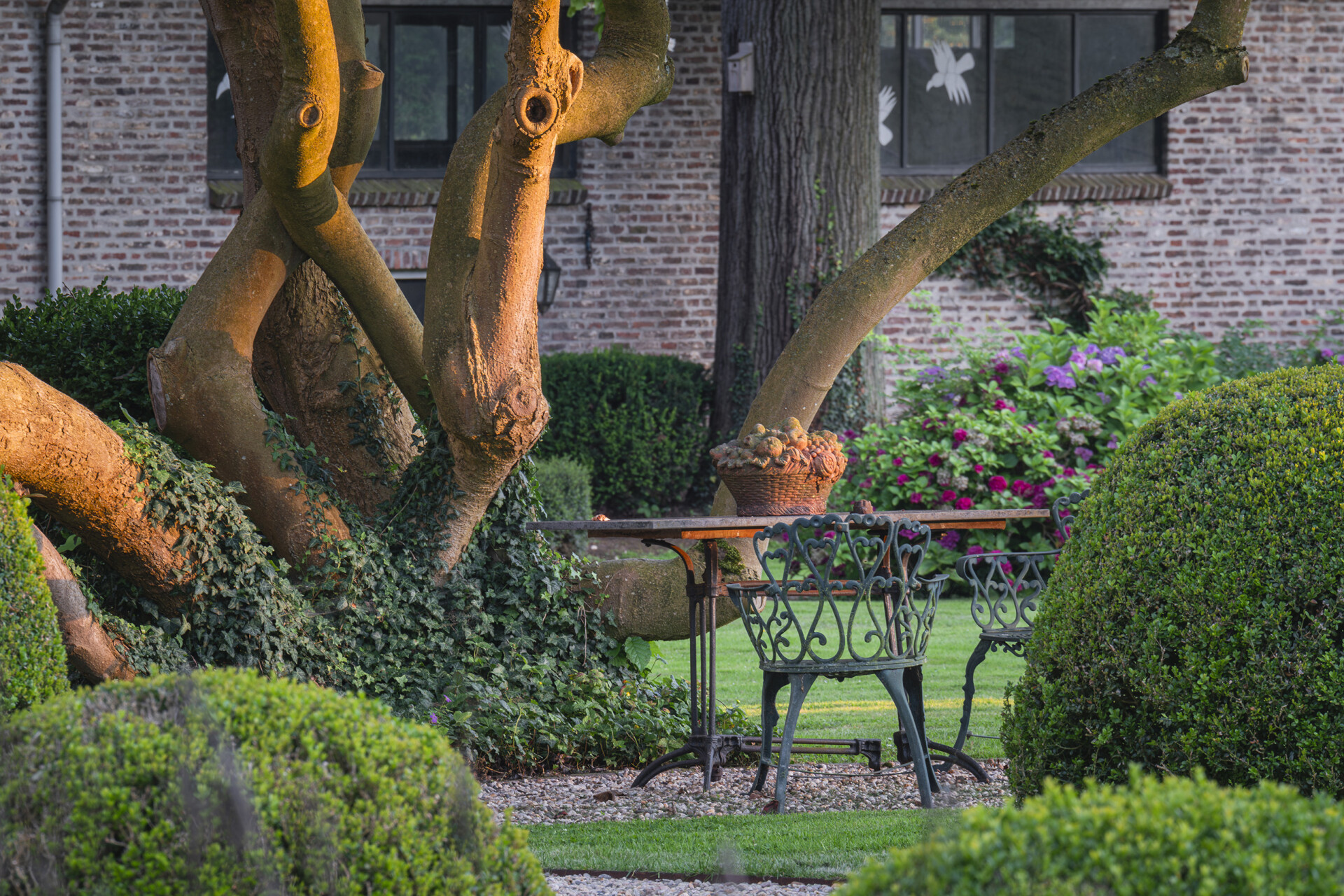
Historic greenery
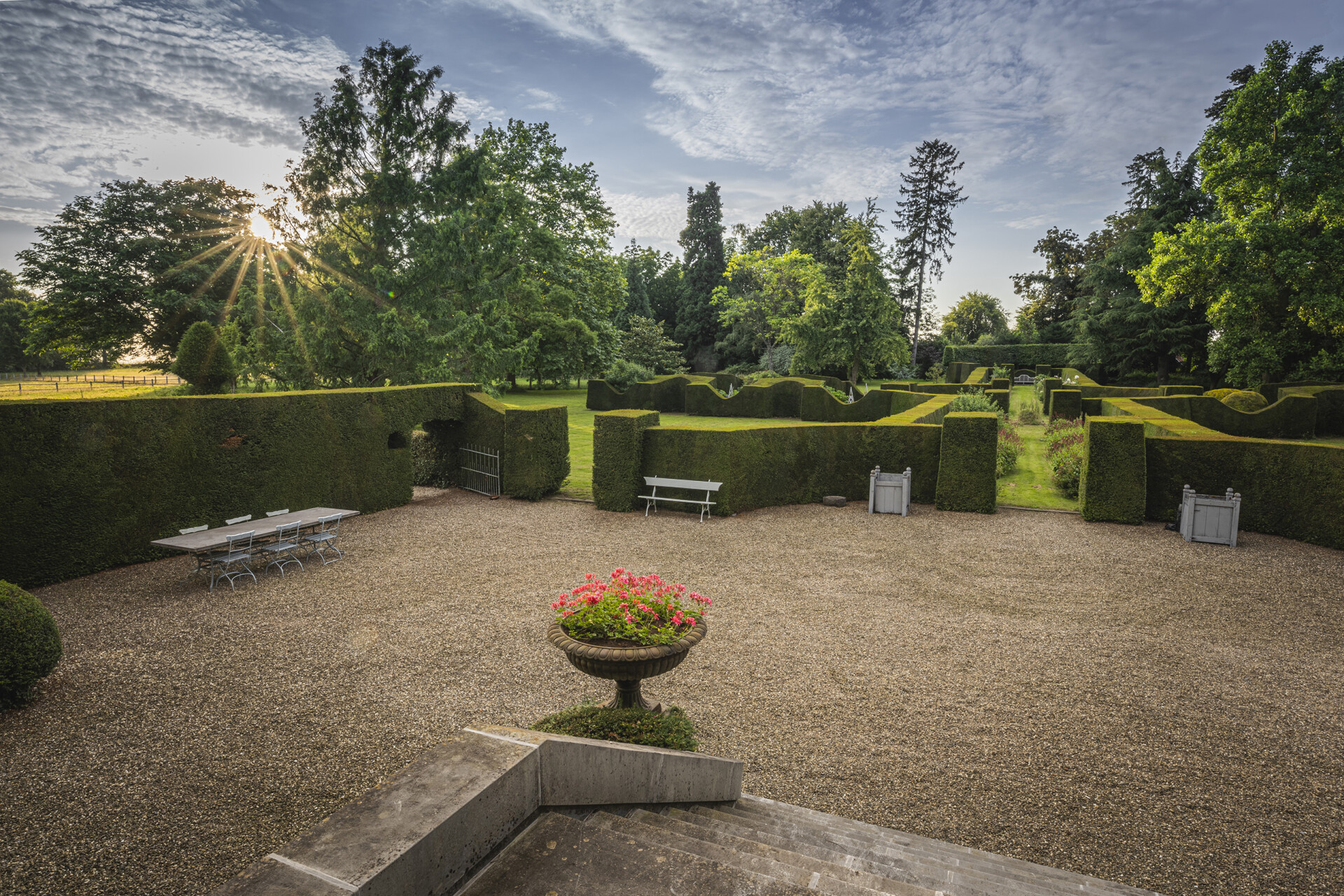
One of the most striking features of the gardens is the giant sequoia (Sequoiadendron giganteum), with an impressive trunk circumference of more than 6 metres - possibly the largest of its kind in the Netherlands.